WE'RE ALL IN! How to Bet
Wager chips with intent — not vibes — before every minigame at the table.
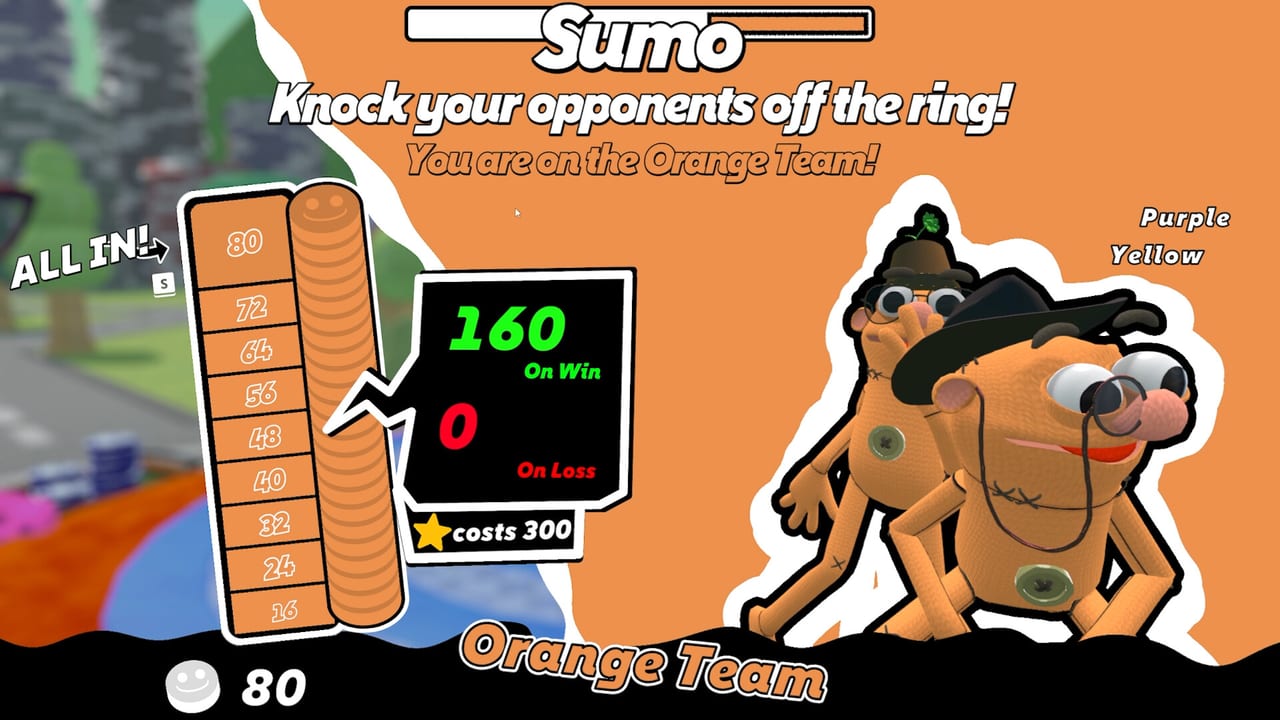
Betting is the identity of WE’RE ALL IN!. Minigames supply the spectacle; the table decides who actually climbs the star ladder. This guide teaches you how to place chips with a plan, whether you are in a sweaty 1v1, a chaotic free-for-all, or a coordinated team night. Pair it with How to Win so conversions into stars stay on schedule, and revisit Getting Started if the overall loop still feels fuzzy.
What you are betting on
Before each minigame, the lobby returns to the betting table. You wager chips on who you believe will win the upcoming challenge. That “who” can be yourself when you trust your aim in a sniper duel, a teammate during team modes, or the sweaty friend who always cooks in Paint Tiles. Correct bets grow your chip pile. Misses hurt. Those chips later buy stars at a rising cost — which means reckless early all-ins can strand you without conversion fuel.
You are not predicting the stock market. You are reading:
- Minigame type — aim, luck, mash, movement, or pure chaos.
- Player form — who just dominated football with moving goals, who keeps dying first in lava survival.
- Mode context — 1v1 is a coin-flip of skill; eight-player free-for-all is variance city.
- Table psychology — who is tilted, who is sandbagging, who always bets on themselves.
Bankroll basics
Treat chips like a session budget:
- Seed rounds — place smaller exploratory bets while you learn who is cracked at laser dodging versus who only wins coin flips.
- Value rounds — when a minigame matches a known specialist, size up.
- Protection rounds — if you are close to a star conversion, avoid donating your stack on a musical-chips coin-flip vibe.
- Swing rounds — late session, trailing on stars, you may need aggressive wagers to rebuild chips fast. That is intentional risk, not random tilt.
Never confuse “I feel lucky” with a plan. Luck minigames (coin flips, some hot-potato variance, rock-paper-scissors mind games) deserve smaller default sizes unless you are specifically hunting chaos.
Favorites, long shots, and self-bets
- Betting on the favorite — safer chip growth when one player clearly owns grenade launcher brawls or sumo. Lower upside if the whole table piles on the same name.
- Long shots — juicy when a chaotic arena can crown anyone, or when a quiet player suddenly looks awake. Size carefully.
- Self-bets — powerful when you know the upcoming challenge. If Paint Tiles is next and you have practiced denial routes from the Tile Painting guide, betting on yourself aligns incentives: you play hungrier because your wallet depends on it.
In team modes, talk before you lock chips. A squad that scatters bets without a plan will fund the enemy table narrative.
Reading the upcoming minigame
Map each reveal to a betting posture:
| Minigame flavor | Betting note |
|---|---|
| Paint Tiles / territory | Favor movement + disruption specialists; pushes matter |
| Sniper duels | Favor aim kings; smaller fields reduce variance |
| Coin flips / RPS | Keep sizes modest unless you need variance |
| Mash sprints | Favor players with consistent cadence, not panic mashers |
| Lava / laser survival | Favor calm movement; punish over-aggressive push addicts |
| Football / moving goals | Favor spatial IQ and passing chemistry in teams |
| Eight-ball riding / chaos vehicles | Expect upsets; avoid overbetting a single name |
For ranked opinions on which challenges swing hardest, use Minigame Tiers and Betting Risk.
Table tells and social reads
Party games leak information:
- The friend who loudly claims “easy win” on hoop jumping might be baiting chips onto themselves.
- Silent players who just unlocked a sweaty cosmetic sometimes play differently — confidence or distraction.
- After a brutal loss, some players overbet the next round to “get even.” Fade that energy or fade their name.
- Hosts who just enabled sniper duels in lobby settings may be signaling who they want to spotlight.
Voice chat is a double-edged sword: great for team bets, terrible if you announce your entire strategy to predators.
Common betting mistakes
- Same bet size every round — ignores minigame variance and star timing.
- Always betting on yourself — ego is not edge.
- Never betting on yourself — you leave free value when you are actually the favorite.
- Ignoring leftover cash planning — chips exist to become stars and to break ties at the margins; see How to Win.
- Chasing losses on pure luck games — that is how sessions die early.
Practice drills in private lobbies
Custom lobbies are your lab. Turn off everything except two or three minigames, play short sets, and force yourself to narrate bets out loud: “I’m betting on Sam because laser dodging rewards patience and Sam hasn’t tilted yet.” After five rounds, review who would have profit if stars were ignored — then overlay star conversion timing. Controls comfort from the Controls page reduces “I bet on myself and whiffed the mash” disasters.
Advanced: correlating pushes with bets
If you bet on yourself in a push-heavy arena, your shove priority changes: deny the rival you need to beat, not the random third place. If you bet on a friend, consider peeling attackers off them — or, in free-for-all villain mode, quietly do nothing while your ticket rides. Ethical? Debatable. Effective? Often. House rules can ban griefing allies if your group prefers wholesome nights.
Linking betting to cosmetics and morale
Winning bets feels better when you look ridiculous doing it. Unlock paths sit in Cosmetics, but do not spend mental bandwidth on drip mid-hand. Clear the table first.
Quick reference before you lock chips
- What skill does this minigame reward?
- Who has shown that skill tonight?
- How many players increase variance?
- Do I need chips for an imminent star buy?
- Am I betting with edge or with ego?
Master those five questions and the betting table stops feeling like a casino firehose. It becomes another minigame — the one that decides whether your mechanical wins actually matter. When you are ready to convert pressure into podium finishes, continue with How to Win, and keep the broader map on the Guides Hub.
Frequently Asked Questions
Quick answers to the most common questions.
Can I bet on myself?
Yes. Self-bets are strong when the next minigame matches your strengths, but ego-betting every round will drain your chips.
Should I go all-in often?
Rarely. Save large swings for moments when you need chips fast or when your edge on the minigame is obvious. Protect stacks you need for star conversions.
Do luck minigames change bet sizing?
Yes. Coin flips, rock-paper-scissors, and similar variance games deserve smaller default wagers unless you are intentionally hunting chaos.
How does betting differ in team mode?
Coordinate with teammates so you are not accidentally hedging against your own side. Shared plans beat scattered vibes.
Where do chips go after betting?
Resolved wagers adjust your chip total. Those chips later convert into stars at a rising cost — the real win condition.